OUTSIDE MVMNTS
EN/PTNewsletterMenu +
×
EN/PTWe Outside®

In Birmingham, a street party tries to save five clubs from a railway project

Nightlife · Business

Article • • 2 min read

Share ↗

From London to New South Wales, the defense of the dancefloor now relies on legal status, alliances of owners and legislation.

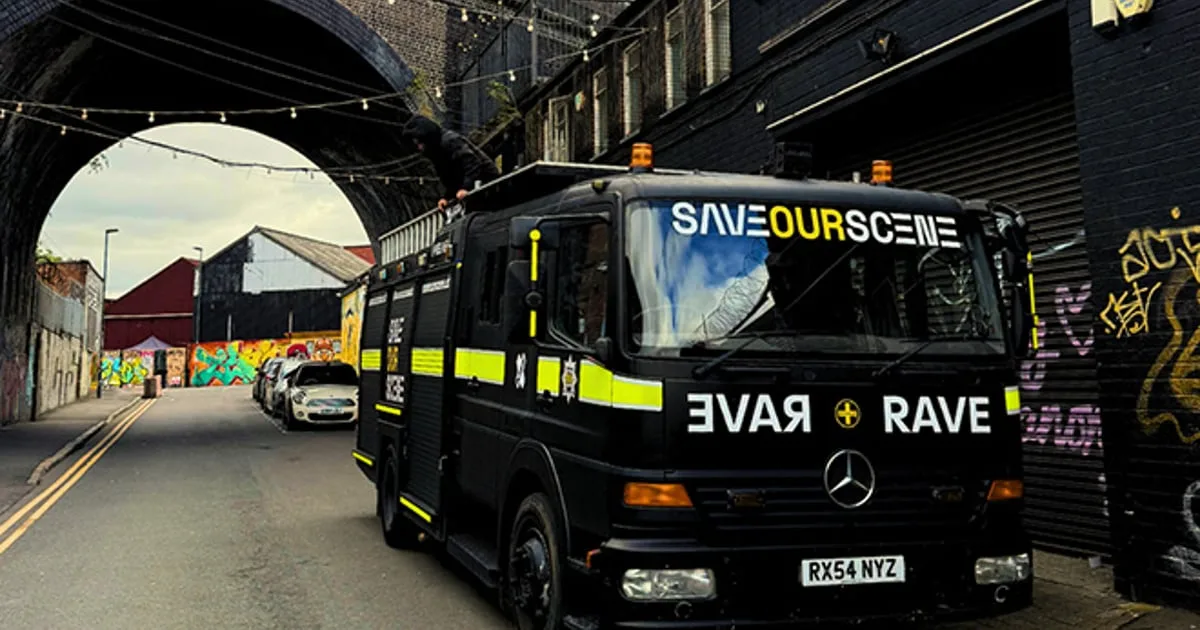
DJs play for the crowd at a street party in Birmingham, in front of the Digbeth clubs.

Photo: Save Our Scene (conforme a matéria)

One afternoon, Lower Trinity Street in Birmingham became a dancefloor. Silva Bumpa, Fleur Shore, Fat Tony and Low Steppa played outdoors at a party that was also a protest: in the English city, the defense of nightclubs moved out of the club and into the street. The target is a railway plan that could tear down XOYO, Club Colette, The Night Owl, Luna Springs and Mama Roux's, five addresses in Digbeth.

The event was organized by the Digbeth Music Venues Alliance, an alliance of the venues themselves, according to the British magazine Mixmag. Clubs defending clubs, as a bloc, changes the scale of the fight. The fate of the project has not been decided yet, but the shape of the response already says a lot.


[01]

London gets a shield, Dortmund loses a club

Opened in 1979, Heaven already had Asset of Community Value status, which protects the building against redevelopment. The designation had expired, and the club returned to the list for another five years after a nomination by Michael Kill, CEO of the Night Time Industries Association (NTIA). Speaking to the Evening Standard, as quoted by Mixmag, he summed up the argument.

"Heaven is more than a nightclub." Michael Kill, CEO of the Night Time Industries Association

Not every venue finds this shield. In Dortmund, Germany, Tresor.West announced it will close at the end of 2026, under pressure from falling attendance and rising costs, according to Mixmag. Until December, the calendar becomes a string of farewell parties. There, the threat is the math that no longer adds up.

Facade of Heaven, a nightclub opened in 1979 in central London.

Photo: Matthieu Aubry (crédito indicado na matéria da Mixmag sobre a Heaven; confirmar)

[02]

In Australia, a law; in Ibiza, an internal dispute

In New South Wales, minister John Graham announced the Contemporary Music Act 2026, a law that creates a three-tier recognition for live music venues. In Ibiza, the dispute is internal: a study commissioned by nightlife businesses claims that the promotion tactics of the biggest clubs squeeze the island's small businesses. The danger changes address, but the vocabulary converges: legal status, alliances of owners, legislation.

In Brazil, clubs and parties compete for space with the real estate market and with noise rules. The sequence of cases abroad offers a clear reference for how this defense can take shape. Nightlife has begun to defend itself as cultural infrastructure.

Discover Outside Movements products at weoutside.com.br/movements.

nightlifeclubscultural policyUnited Kingdomelectronic music

Sources: Mixmag (revista) · Mixmag (revista) · Mixmag (revista) · Mixmag (revista) · Mixmag (revista)

Photo: Save Our Scene (conforme a matéria) · Matthieu Aubry (crédito indicado na matéria da Mixmag sobre a Heaven; confirmar)

Read the street first, every week, in your inbox.

Other reads

Read all
Outside Movements

Reports and cultural intelligence for brands: The Street Read, Radar and Deep Dive.

Explore the products →